Skip to content

Blog

Members Public

How To Get Through A Big Pile Of New Music

Right now I’m working through a playlist of several hundred tracks from different sources: Email attachments, CD rips, RSS feeds, Etc. A lot of this listening is a job. And like any job, I’ve thought about how to organize and streamline it. It would take a lot of

How To Get Through A Big Pile Of New Music

Right now I’m working through a playlist of several hundred tracks from different sources: Email attachments, CD rips, RSS feeds, Etc. A lot of this listening is a job. And like any job, I’ve thought about how to organize and streamline it. It would take a lot of time and screen shots to go through the applescripts and filters I’ve written for iTunes, but I thought I would share a few basic ideas/tips that I use for getting through the pile. This works best for getting through lots of unknown/new artists, tracks you’re curious about but not committed to reviewing or writing about or even keeping yet.

1. Create a folder or playlist and treat it like an inbox.
Just like it’s inconvenient to check multiple applications and sites for your various email accounts, it’s inconvenient to stream music on Hype Machine, find MP3s scattered around your laptop/iPod, hit play inside every RSS feed in your feedreader, etc. At least for me it is. So I have one playlist on iTunes that anything new must go to. I download anything I want to listen to, rip CDs and put them in that playlist, add podcast MP3 streams, etc., and it all goes into that folder, which automatically adds tracks to the playlist.

This doesn’t work for stream-only tracks, which is probably why I don’t usually listen to stream-only promos.

2. Decide what happens to music once you listen to it. Make rules.
Is one listen enough to decide whether to keep something or research the band a little more? Is five listens? How about keeping, deleting, or re-listening to tracks once you’ve rated or tagged them as worthwhile? This is especially important for the blind listens, when you’re just trying to discover new stuff.

3. Make a smart playlist with those rules and filters. This is the playlist you will listen to.
My playlist says that tracks must come from my inbox playlist, and that they must be unrated (plus six other, less important rules). This is my “new music” playlist. This works best in iTunes, but I know other players have filters.

4. Make yourself a ‘trash’ playlist to go with your inbox playlist.
This is how you know what to delete. Make rules for this as well — if you skip a song more than three times, if you rate it below two stars, etc. Once in a while, go to this playlist, select all the tracks, hit option + delete, and get rid of the tracks permanently. I’m not precious about keeping whole albums, so this doesn’t bother me, of course.

(Bonus Tip) If you’re using iTunes, listen to your playlist through the iTunes DJ function.
If you make “unrated tracks” part of your filter criteria, then the song you are listening to will stop playing if you rate it during playback. If you are listening to the iTunes DJ, it won’t stop playback. Just set the “Source:” (bottom left corner) to the playlist you need to get through to work this way.

(Bonus Tip) Download the NPR script from Doug’s Applescripts
Here’s the link, but it’s down right now. This script will make it so that, once an hour, iTunes will go to NPR.org, download the latest five-minute hourly news update, and queue it after the currently playing track. It’s like creating your own NPR station. I call mine WBRR (Worst Blog Rock Radio).

There’s so much more I could mention about tags, filters, applescripts, hot keys (I made it so I don’t have to switch to iTunes to rate tracks, just hit option + apple + number to rate tracks) that I think makes all this even easier, but I got it all from Googling. You can too. Plus, that stuff is so specific to the way I listen to music, I doubt it would be useful to that many people. Anyway, I hope the rather general (though, admittedly, iTunes specific) things above help you. EDIT: I’ll try and do another post soon with download links to scripts and actions that couple help. Just have to organize and upload them.

Members Public

Curating and editing is a skill (or an art, or both)

I just read something very bothersome, although it’s probably more bothersome to Rich, my editor at VH1 (who also runs FourFour (I may be the only person who knows those things in that particular order)), than it is to me. Quickly: Rich edited together this supercut of moments in

Curating and editing is a skill (or an art, or both)

I just read something very bothersome, although it’s probably more bothersome to Rich, my editor at VH1 (who also runs FourFour (I may be the only person who knows those things in that particular order)), than it is to me. Quickly: Rich edited together this supercut of moments in horror films where the characters’ cell phones die. On Youtube it has over 300,000 views:

This week an NPR writer did a story on the horror cliche of the dead cell phone. She never acknowledges Rich’s video, though her piece uses the same audio, has the same subject matter, etc. Here’s the audio from NPR:

[audio:http://public.npr.org/anon.npr-mp3/npr/me/2010/05/20100505_me_20.mp3]

She does link to it in her piece online, but she only did so after Rich wrote about it, and some of his commenters commented on her story. What’s bad about this?

First, she basically uses the same films that Rich does. I mean, she adds in one or two new films (which she points out in her defense Tweet (defense Tweet!)). But she likely added them in for relevance (when you’re a writer and you pitch a story you have to connect it to something timely in order to get your pitch heard). And she interviews a couple of horror fans in California. But in her piece she’s basically providing running commentary for what she sees in Rich’s video. It’s not like he just randomly threw together all the clips either — he organizes them into sort of mini clichés and subcategories. The same groupings that she uses, and, worse (from a “that probably took him a long time” POV) and she uses the audio from his clips.

So why this sucks in a more-than-wanting-credit way: Curating and collecting is such a big part of a music or pop culture writer’s skill set. Not crediting curation, indexing, etc., is like not crediting someone who created a playlist or a DJ mix. This is terrifying when half your job involves recalling details and putting them together. And terrifying when the other half — reviewing records — becomes less needed/wanted. Maybe what we put it together isn’t our work, but putting together is work.

I’m thinking also of Rich’s gif walls for Ru Paul’s drag race, which, when viewed, create this hypnotic, hilarious, disturbing collage of big and small gestures. If Rich had presented this as a “piece” like the Wrath of Khan video

…there be no question of having to credit him. And couldn’t you see one of these posts becoming some huge, multi-television, three stories high piece at the New Museum (except, I think the New Museum is just awfully designed, but you know)? It’d be great! It’d be art. And it would be credited or acknowledged. But since it’s inside a blog post, then it doesn’t get the same sort of treatment.

Now if she didn’t want to acknowledge this as her idea (and maybe she did come up with it independently), she had to acknowledge that a lot of the heavy lifting was done for her, right? This YouTube video is compiled research. When I was a linguistics undergrad I collected sounds and samples for a research project called “Instances and Examples of -iz Insertion in Urban English.” That’s one way of saying I collected, recorded, and saved every time I heard someone use “shizit,” “snizzle,” “nizzle,” etc. in hip hop, in interviews, TV shows. Had I compiled those (my shizzle reel), then that’d have to be acknowledged as research too. But once again, blog post /Youtube = not real?

Now I think the other big problem — which I noticed when I uploaded my compilation of Kristin Stewart sighs — is that YouTube doesn’t acknowledge supercuts are works you own. YouTube has no regard for fair use whatsoever. You aren’t even supposed to upload works you didn’t shoot and edit yourself, so YouTube can take things own based on that alone. But if they don’t acknowledge fair use, then it’s harder to expect other people to use stuff fairly.

Rich, in his post about the NPR piece, knows that it’s one of the problems with making and releasing stuff online. In fact, when I interviewed at VH1, Rich complimented my Twilight video and I sat there almost polishing my nails on my shirt. Only later did I realize that he had done a ton of these, tons I had seen and enjoyed. But I never knew they were his, because they were embedded without attribution on a lot of other sites.

Members Public

Op-Ed By Fucked Up's Damian Abraham: Bands Should Play In Arizona Now More Than Eve

Before I go any further, I want to say that this is in no way meant as an attack on the bands that have chosen to boycott Arizona as a reaction to this bill. I think they have their reasons for choosing this tactic to try a force the repealing

Op-Ed By Fucked Up's Damian Abraham: Bands Should Play In Arizona Now More Than Eve

Before I go any further, I want to say that this is in no way meant as an attack on the bands that have chosen to boycott Arizona as a reaction to this bill. I think they have their reasons for choosing this tactic to try a force the repealing of this law. That said, I think this strategy is severely flawed. First, I think it makes assumptions about the people that like your band. It presupposes not only that the people like your band are incapable of coming to the reasonable idea about this bill, but that they are in favor of this bill. The fact is, this was a ugly divisive issue across the state and that there are a huge number of people in Arizona that were bitterly opposed to the legislation and are now disgusted that it has been made law.

Love Fucked Up, love this guy. I have a few more thoughts to add on this:

I’m from Arizona so I’m a little biased. But I think bands still playing there makes sense. Boycotts work when your individual voice doesn’t matter to many people. No one is concerned with what one not-famous or not-prominent person thinks of the new law. That’s why that person has to join a boycott or participate in marches/protests to have a say. But obviously bands have a higher profile. People pay to see you, they ask to interview you, etc. You’ve got a more effective way to voice your opinion. Isn’t that the same reason why bands hold charity shows instead of anonymously handing over a couple bucks to a charity — because they know that their position gives them more options to raise money and awareness?

And comparing an indie band boycott to a tourism/convention center boycott is comparing apples and agriculture — you are, at most, going to take dollars away from venues that are, like small venues all around the country, barely profitable anyway. Do you really think you’re sending a message to the legislature when you cancel a show at a non-profit arts space staffed by volunteers (typical of Arizona venues that host indie bands). If you were talking about rock arenas, playing convention centers, corporate-owned stadiums, that’s another thing.

As Damian says above, you’d also be preaching to the choir in Arizona. I can’t say for sure, of course, but based on my time in Arizona, I’d guess 99% of your audience there shares your opinion of the law. They are the ones who have, for years, staged marches, registered voters, driven to the border to confront the Minutemen. It’s patronizing to think you’re making them wake up to an issue that’s been boiling down in Arizona for years and years before this law passed.

If you agree (or disagree, whatever) drop a comment over at Stereogum.

from Posterous

Members Public

On that Awl piece about Rivers Cuomo and Pinkerton

The piece starts out with this: Before we begin, let us be clear: We speak not of the Rivers Cuomo that was, nor of the Rivers Cuomo that is, nor yet of the Rivers that shall be. We speak, now, of the Platonic ideal of a Rivers Cuomo: The Rivers

On that Awl piece about Rivers Cuomo and Pinkerton

The piece starts out with this:

Before we begin, let us be clear: We speak not of the Rivers Cuomo that was, nor of the Rivers Cuomo that is, nor yet of the Rivers that shall be. We speak, now, of the Platonic ideal of a Rivers Cuomo: The Rivers Cuomo you have never met, nor ever can meet, nor can ever be sued by (subsequent to writing a blog post that uses his name quite a lot), but who lives, nevertheless, within your brain. Specifically, if you happen to have grown up in the 1990s, and are heterosexual, and also a girl.

And then breaks up into headings like “Seduction” “Consummation” “Couples Therapy” etc. and spends a lot of time exploring the idea of Rivers Cuomo as the secret boyfriend we ladies wished we had at some point in our pre/teen years.

I had to turn off the rest, because that is not how I related to Pinkerton at all when I first heard it, or when I listened to it in college. Obviously my relationship to Pinkerton is complicated, but not because I loved him then discovered he was a creep, or even because I related to him and then was repulsed (further complicating things, of course, is that I am still working on the 33 1/3 Pinkerton book, to be published posthumously). But it is a bit closer to the latter. The latter is harder, and tons more interesting to me, because if I believe that I was a Pinkerton fan because I related to it (him? Or the him that is part bio, part stolen from Harvard classmates, part fictional character, part Capt Pinkerton), and now it makes me uncomfortable, then I have to work on the reasons why I related to it. But I do not feel cheated by Pinkerton or Cuomo.

Also I have a lot of notes (some on books, some song-by-song reactions, some free-associated, some labored over) about Pinkerton. I found this from some early notes (I think I was trying to sketch out why I thought I was qualified to write about Pinkerton):

I understand how desire can transform into hate or apathy. I understand that sometimes a collection of charcteristics [sic] can stand in for any sort of real attraction. I understand desire as purely a way to satisfy a lack of honesty or to fill in a self-loathing. To let that self-loathing form an inverse proportion to a capacity for love.

Also later, a pretty cryptic line: ” I never found an outlet for that paralysis.”

The paralysis above refers to the further above, a basic relating-to-boys paralysis, not my Pinkerton fandom. My natural reaction in middle school to hearing Nirvana and Weezer was to buy a guitar and insist on lessons, not crush on guys that looked like Kurt Cobain and Rivers Cuomo.

I will stop here, since I have the book to write. I will say, however, that I haven’t written anything so far about My Personal Relationship To Pinkerton. I’m sure it’ll show up, but it’s still not the most interesting aspect of Pinkerton for me, so I doubt it would be to anyone else. I’ll re-read the piece this weekend.

Members Public

A quick story about 17 year old me meeting Rufus Wainwright

A publicist invited me to Rufus Wainwright’s semi-secret show earlier this month, and I was so excited I sent her this unnecessary Rufus Wainwright anecdote: When I was 17 he came to perform at a club attached to a hotel in Tucson, Arizona, opening for Lisa Loeb. I was

A quick story about 17 year old me meeting Rufus Wainwright

A publicist invited me to Rufus Wainwright’s semi-secret show earlier this month, and I was so excited I sent her this unnecessary Rufus Wainwright anecdote:

When I was 17 he came to perform at a club attached to a hotel in Tucson, Arizona, opening for Lisa Loeb. I was too young to get in to see him play, so I skipped school and just waited all day until he arrived at the venue. When he showed up he was really, really surprised to find out he had a fan in Tucson and was so kind to me, asked questions about what I wanted to do when I was out of high school, what Tucson was like, etc. And he signed this postcard from the hotel lobby for me. I told him I thought I’d never get out of Tucson and I remember he said, “You can do whatever you want, honey.” He was the first musician I’ve ever met, and still the nicest.

Members Public

I was a pre-teen monster

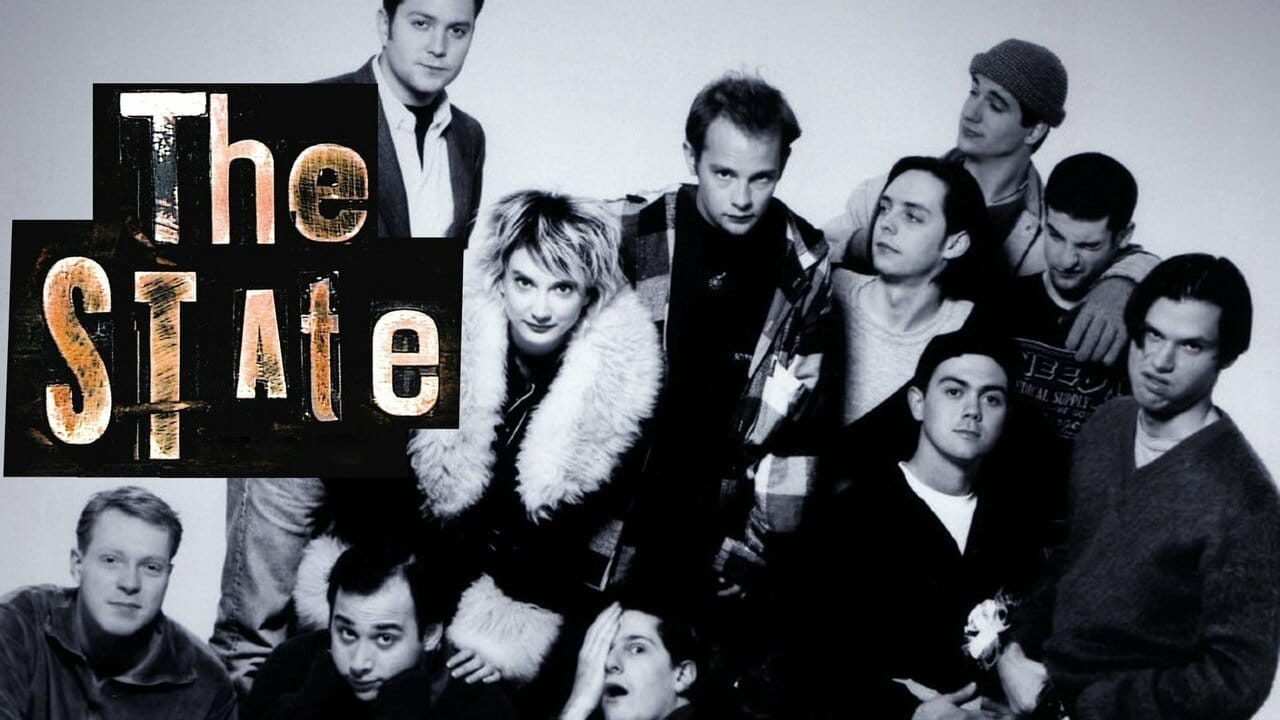
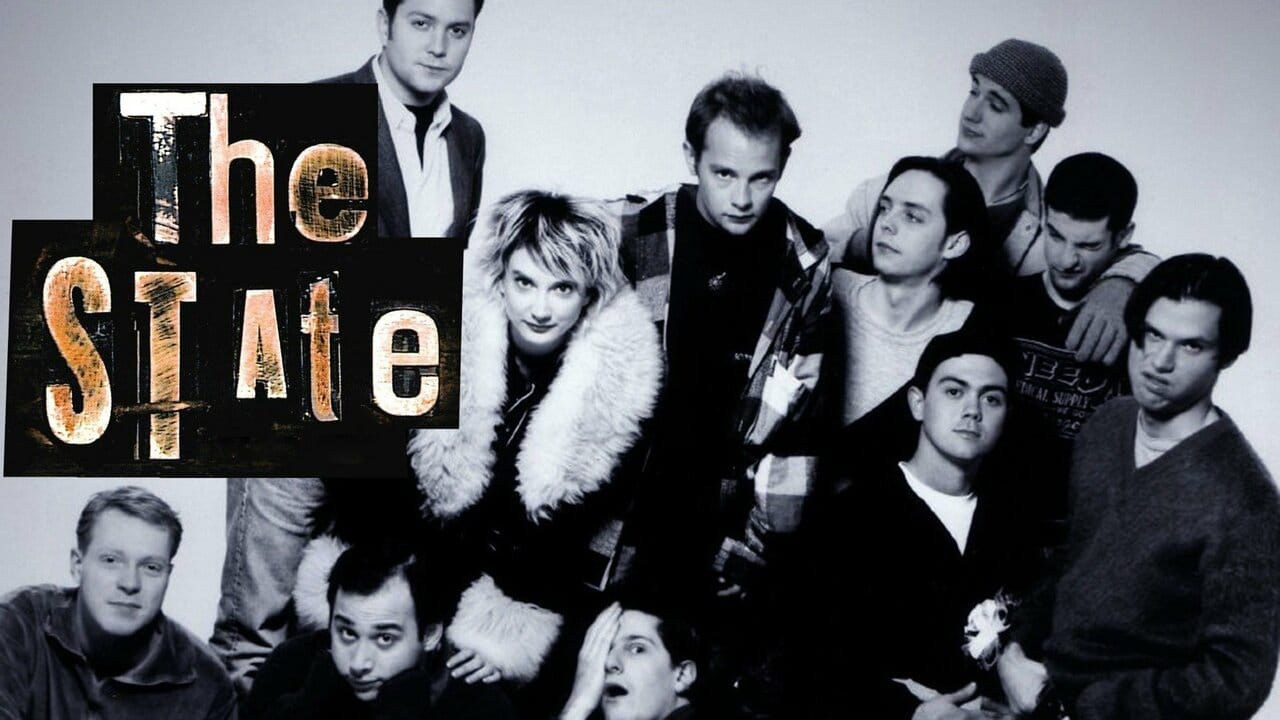
I’m going down to the Bell House tomorrow to help prep for the Rarities From The State show, where cast members David Wain, Michael Showalter, and Michael Ian Black will show old show clips. Thing is, The State had a huge effect on my formative years. Without the State

I was a pre-teen monster

I’m going down to the Bell House tomorrow to help prep for the Rarities From The State show, where cast members David Wain, Michael Showalter, and Michael Ian Black will show old show clips. Thing is, The State had a huge effect on my formative years. Without the State I would have never learned about Girls Against Boys or Shudder To Think, who co-wrote the theme song. I would have never started listening to Kerri Kenney’s band Cake Like, which led to discovering experimental music (they were signed to John Zorn’s label).

So to celebrate I thought I’d post half of my State zine along with some transcribed quotes. This zine contains my first “interview” ever, a Q&A conducted over AOL mail with Michael Ian Black when I was 13. I then interviewed him again when I was 23, then again for Paper Thin Walls about a year ago. I believe my interview technique has remained stable, and remains still better than 60% of the Q&A’s I read from grown men and women.

Click on the pictures for full-sized pages.


Page 1 notes:

  • My zine was called “Squiky Clean,” because my principal’s one stipulation for distributing a zine on campus was that it be “squeaky clean.” The misspelling was intentional, as I was intentionally lazy when I did the layout in Quark.
  • I describe Michael Ian Black as “amazingly talented, amazingly attractive.” He looks pretty much the same now, so I stand by that.
  • I wrote a sidebar about how how protecting the environment, and charity in general, was stupid. This was during a brief objectivist stage that I got over quickly. In 8th grade I joined the young socialists.


Page 2 notes:

  • This is a continuation of the Michael Ian Black interview. I have inserted things like “Good answer” and “I agree” after his answers, to make it seem less “over email Q&A”-like.


Page 3 notes:

  • This page includes quotes from Shakespeare and Francis Bacon, which I think I got from searching a quotes database for phrases like “revenge.” Revenge was, for me, like many nerds in middle school, a big daily concern.
  • The second part of this page is called “Let’s play a game,” basically a list of fantasies like becoming an intern at MTV, front tickets to REM, shopping on Southstreet in Philadelphia, and getting “smashed on Yeagermeisters [sic] while hanging out backstage with Tim and the rest of the guys in Rancid after their show at CBGB’s.” I have still never had a Jagermeister. Or ever went to CBGB’s. Or hung out with Rancid.


Page 4 notes:

  • “New York is unconditionally, undeniably, the coolest city in the world.” Reasons I list were: invention of moshing, Greenwich Village and Soho, and the Hard Rock Cafe and House Of Blues. The latter two must have symbolized some sort of famous-cool to me, otherwise I can’t believe I held them in the same regard as CBGB’s. But, I did predict that they would be one in the same some day.
  • “Take this from a future New Yorker.”
  • I also explain what six degrees of separation is, because I had just seen the movie “Six Degrees of Separation.”


Page 5 notes:

  • I review Cake Like, mentioning that the CD was $22 dollars on import, which is like $30 after inflation and like $2,455 to a kid in middle school.
  • “Their sound is raw, edgy, unique and powerful.”
  • I also talk about their “chunky guitars, sporadic bass and lyrics about crushes.” This is, still, mostly what I’m looking for.


Check some things off the middle school wish list: As a 13-year-old comedy nerd in Yorktown, Virginia, I thought endlessly about moving to New York, writing for magazines, and going to shows. So for the most part I’ve done alright.


Members Public

A few recent work related things: ABC, Sound Of The City, Stereogum, Spin

I’ve gotten really bad (for whom, for what?) at posting recent work and clips and stuff, so I’m going to try to do this on a weekly basis. So, this week. I subbed for ABC’s Dan Harris over at his weekly online indie rock interview show, Amplified.

I’ve gotten really bad (for whom, for what?) at posting recent work and clips and stuff, so I’m going to try to do this on a weekly basis. So, this week.

I subbed for ABC’s Dan Harris over at his weekly online indie rock interview show, Amplified. I got to watch a great, rooftop performance by the Noisettes, and talked to them a little bit about how their lives have changed since “Don’t Upset The Rhythm” went to #2 in the UK:

I wrote a new Progress Report on the Go! Team for Stereogum. My favorite quote was right at the end:

Even though it’s album three and the tradition is to mature and all that bullshit I have no desire to clean up the sound.

Spin just ran my review of Sian Alice Group’s Troubled, Shaken, Etc. Such a good record. I called Sian Ahern “a singer with Nico’s presence and complexion.” Just look at her (photo from Ahmed Klink):

And this was last week, but I’m still very proud and thankful to have a chance to talk to These Are Powers about touring China. Before they left they had to record a “performance” for the cultural officials in Shanghai:

We actually had to record it in our practice space, and we pretended like it was a show, so we all clapped and said, “Thank you!” at the end of it. It was really silly. It was by far the most awkward I’ve ever felt playing a set of any music that I’ve been a part of. We’re like, “Hey, Chinese government! Here we are performing for you on video!” I guess it worked.


Members Public

How I judge music

Pitchfork’s internal editing system lets me see my past review scores all in one place. Since I don’t review stuff very often for them, I was a little surprised to see the numbers all in one place like that. It turns out I’m a high grader. Or

How I judge music


Pitchfork’s internal editing system lets me see my past review scores all in one place. Since I don’t review stuff very often for them, I was a little surprised to see the numbers all in one place like that. It turns out I’m a high grader. Or rather, when I write about things I know I like (because that’s what I want to write about, if I can), then I tend to give it something in the 6-8.8 range. That makes sense to me. But it’s harder to make sense of what makes an album truly terrible. So I wanted to go down some things that most music writers have internalized, but that I feel like a lot of Pitchfork’s audience still can’t recognize when they scan a review.

Here’s Robert Christgau’s old grading system explained:

An A+ record is an organically conceived masterpiece that repays prolonged listening with new excitement and insight. It is unlikely to be marred by more than one merely ordinary cut.
An A is a great record both of whose sides offer enduring pleasure and surprise. You should own it.
An A- is a very good record. If one of its sides doesn’t provide intense and consistent satisfaction, then both include several cuts that do.
[… further explanations, then …]
A D+ is an appalling piece of pimpwork or a thoroughly botched token of sincerity.
It is impossible to understand why anyone would buy a D record.
It is impossible to understand why anyone would release a D- record.
It is impossible to understand why anyone would cut an E+ record.
E records are frequently cited as proof that there is no God.
An E- record is an organically conceived masterpiece that repays repeated listening with a sense of horror in the face of the void. It is unlikely to be marred by one listenable cut.

(taken from 43 Folders)

After having written about music for a few years, and having attempted to write and play music myself, I can say for sure that putting out music is like putting out babies: every one deserves to be born.

What does this mean? I believe that creating music is inherently good and positive, and using criticisms like “this band should just quit” or “singer x would do well to pay her label back for this mess,” is lazy and unfair.

However, this does not mean your music shouldn’t be judged. My mom sews curtains and pillow cases, but she’s not trying to sell them or be Martha Stewart. By making and selling records you have agreed to the critical process.

So what is a sub-4 record to me? I believe that good people can make really bad music. Bad people can make really good music. But when bad people make bad music, they get sub-4.0, two stars, whatever, because when bad people make bad music, they are usually making harmful music, stuff that did not deserve to be born. They are usually also making music in a way that rings false with their personalities and reeks of desperation or pandering.

This is music from a band like Louix XIV, who began as an alt-country band, then switched to doing vaguely racist, totally misogynist sleaze rawk (Nick Sylvester rightly called them spineless in his review). Or lately, it’s bands like Brokencyde or Millionaires, kids so careless and attached to their own privilege that they feel fine picking and choosing tropes from hip-hop without acknowledging where they came from or why they exist (it is okay to brag about getting paid when your parents have always paid your bills?).

These are easy targets for sure, and it gets harder once I think about the genres I usually write about or that Pitchfork usually covers. The problems there are less about big red flags–racism, violence, etc–and more about authenticity. Now, I once had a track review cut and replaced (it was of “Intervention”), because it felt inauthentic to me1 , and my editor said I could never judge the “motives” of the band, because I couldn’t know what they were thinking. I say it’s hard, but not impossible, unless your internal sensor is just totally off. Anyway, that’s sort of like saying you can’t judge bad acting (hey, maybe they wanted to be unbelievable on purpose). Inauthentic music is the worst because it’s a rift between who you are and who you want people to think you are. And isn’t that hard enough to cope with in real life, with our friends and boy/girl friends and jobs, without writing it down, practicing it, committing it to tape, packaging it, and selling it? These records and songs, these are the ones that should have never been born and they’ll always be the ones most critically savaged.

I’m losing track of what I wanted to say here, so it’s basically this: I hardly ever give low ratings to albums or hate bands, but when I do, it’s because of a falseness that crosses from the artist over to their music. But I try to not judge music on whether it should have been made in the first place–the answer is nearly always “yes,” though sometimes “no.”


  1. This is a problem with a lot of sophomore albums: they made the first one while no one was watching, now they’re, whether they know it or not, looking over their shoulders. And to me, by the second album, a lot of Arcade Fire’s chest-thumping was for chest-thumping’s sake.↩


Members Public

How to record and transcribe interviews quickly and cheaply

I like finding computer-based ways to do my job cheaper and faster. Most of these methods are to cover up for my natural procrastination: using hotkeys, text inserters, autoresponders, and capture tools helps make up for the time I spent Googling “child riding boa constrictor.” I really, really love finding

How to record and transcribe interviews quickly and cheaply

I like finding computer-based ways to do my job cheaper and faster. Most of these methods are to cover up for my natural procrastination: using hotkeys, text inserters, autoresponders, and capture tools helps make up for the time I spent Googling “child riding boa constrictor.” I really, really love finding this stuff, but I never get to talk about it. Today I’d like to talk about recording and transcribing interviews.

I do 1-4 interviews a week. That’s a lot of audio to deal with, and, for just a little feature, that’s a lot of hearing some guy or girl you used to think was pretty interesting talking about how “melodic” their new record is (a lot of interviewers are terrible, but people forget that lots of bands don’t know how to talk to people either).

I use several things to make doing and transcribing interviews easier: Skype, Audacity, Express Scribe, and a program from Ecamm called Call Recorder. Skype and Audacity are free, and Call Recorder costs $14.95.

Here’s why this trio is an interviewer’s dream:

Skype / Skype Out: I purchased a Skype Out number for $2.95 a month. This allows people to call me from a land or cell line, and lets me call regular land/cell lines. I also get free calls in the US and Canada. I don’t usually have to call overseas, and Skype Out lets you pay as you go for international calls, at reasonable rates. Lately I’ve been using Google Voice for this, because their rates can be even cheaper. Sure it doesn’t have the portability of a cell phone, and you might have to look like this, but the call quality is usually great and it allows you to use the next tool.

Ecamm Call Recorder (for Macs).

This program’s amazing for two reasons:

1) You can set it to automatically record any call if it lasts more than 30 seconds (or any time length you want), so you don’t end up with a bunch of automatic recordings of your boyfriend asking if he should buy cat food or rings where no one answered, nor do you ever forget to turn it on when Cat Power calls you.

2) If you loathe the sound of your own voice and your pathetic questions next to the sound of Chan Marshall purring lazy answers at you, then Call Recorder will allow you to split the sides of the conversation. Cat Power purr on one file, your voice on the other. Now you can transcribe without cringing or crying. This is especially great if you’re grabbing quotes for a feature where you don’t need your questions at all.

3) You can add markers during the call, so, if you’re sprightly and sly, you can add markers like “Question about Scientology affiliation” and “Where he called me a genius,” and they’ll show up as chapter markers in Quicktime. If you convert the file, you can still export your markers (with the timecode) to a text file for easy reference.

4) I said two reasons. There are actually four. You have a visual meter, so you can make sure it’s recording and that it’s recording at a volume loud enough to hear later on.

Audacity (free, open-source sound editor):

Or even better, convert that .mov audio file to mp3 (you can do this with Call Recorder’s built-in scripts), then fire up Audacity and cut out the parts where you were asking questions (it’ll appear as silence on the interviewee’s file). Then you can use Change Tempo to slow it down. I find that -42% keeps the interviewee’s voice clear, but is slow enough to transcribe without having to pause. Hand that edited crap over to your transcriptionist (or intern, or boyfriend). If you’re paying someone and you’re a cheap-o, you could probably get away with editing out your voice, and speeding it up slightly, thus saving on those transcription-per-minute fees. Then you can spend your transcriptionist savings on artificial tears or a conscience.

Express Scribe (free)

If you’re transcribing files yourself and you have a Mac, I recommend using Express Scribe along with your own foot pedal. I just got mine, and it’s excellent, especially when I use it with Express Scribe. The program lets you set universal hot keys, slow down or speed up audio tempo on the fly, and add in time stamps automatically. I usually listen to audio at around 150% speed until I get to quotes I like, then I slow it down and just transcribe what I need.

What about typing during the call?
Some people can do this. I can’t. I usually stare at my own questions, or Google artists or locations they’ve mentioned while they’re talking, so I can come up with smart follow ups. I’ve just never been able to do more than write down the time or scratch a note whenever I’m interviewing someone. I lose my train of thought, or lose the flow of the conversation, if I try to transcribe while talking on the phone.

Oh yeah, also.
Get a headset. No way you can type or Google things or, I don’t know, trim your nails? Eat dinner? During interviews without one. Don’t you want to look this cool:

What about recording on your cell phone?
I have an iPhone, I believe there’s a program that can record your phone calls now. I also used to have one of those attachments from RadioShack that lets you connect your cell phone to a recorder. Me, I use drop.io. For the cost of a single upgrade on a “drop,” I get a conference number where I can place conference calls. The same number will also automatically record the audio and upload it as an MP3 file to your account. The $10 also gets me storage space and outgoing faxes. Not a bad deal. When I need to record an interview on my cell phone I just call my drop.io conference number, then call my subject for an awesome three-way.


How about in-person interviews?
I’ve got an old iRiver IFP for this. It’s about five years old, but it still records to MP3, sync with my Mac, and has super clear audio. The best part? It’s really small. I haven’t recorded to tape since I had my old mini tape recorder in college, but I remembered how interview subjects’ eyes would also glance over at my recorder. I think seeing the thing makes people subconsciously self-conscious. My iRiver player is small enough to keep next to my hand, under the table, hidden behind a salt shaker at a diner, etc., so that the subject knows it’s there, but it’s small enough to forget. Loose lips make for the best interviews.

One last thing.
Don’t forget to check your state’s laws on taping conversations. My state, New York, allows for one-party consent. When I do phone interviews I don’t tell them I’m recording, I assume they know what they say to me is on the record. I usually make clear that I’m recording interviews when I do them in-person, just because they don’t always know everything’s on the record, and I’d rather avoid problems later.

[share facebook=”true” twitter=”true” google_plus=”true” pinterest=”true” reddit=”true” email=”true”]

EDIT:

Here’s some tips from some friends:

From Yancey Strickler:

the trick i always use is just having the internet transcribe my interviews for me. costs about $18 an interview. well worth it: http://waxy.org/2008/09/audio_transcription_with_mechanical_turk/

From my awesome ex-editor Reid Davis:

Also, when I’m away from my computer, I used MacAlly’s iVoice pro hardware plug-in for my iPod along with Griffin’s iTalk Pro software. You can record through the built-in mic, or plug in another device, like a landline phone (Radio Shack telephone recorder, about $12.)

From writer / Tucson friend Curtis McCrary:

also, fyi, google voice will record incoming phone calls for you (but not transcribe them). but it’s an easy shortcut to getting an interview recorded and in easy-to-listen-to form on the computer.

Members Public

What's going on in Austin?

Three years ago, which was about five months into my “professional” music writing career, I personally put a manila folder of clips into Rob Tannenbaum’s inter-office mailbox at Blender. A few days later he emailed me some nice comments, and also a little critique: You’re writing within the

What's going on in Austin?

Three years ago, which was about five months into my “professional” music writing career, I personally put a manila folder of clips into Rob Tannenbaum’s inter-office mailbox at Blender. A few days later he emailed me some nice comments, and also a little critique:

You’re writing within the biosphere of your enthusiasms and subjects; the reviews communicate in a code that’s shared by a coterie that only feels large when you’re in a rock club.1

Now imagine that club is 20 clubs, and imagine they all line a couple of connected streets.

There’s been some mention of how the recession doesn’t seem to exist down in Austin right now; parties are just as huge, gift bags just as gross, bands just as plentiful. And while there’s something sweet and anachronistic about that, part of me thinks that it only proves that this, smaller world, is still in the business of making itself feel large, talking to itself at the exclusion of everyone else, no matter what it costs. A lot of time is spent laughing at bonehead moves made by major labels, but I wonder if these labels/publications/bands are making the same moves.

CMJ, as poorly run as it is, still has a clear purpose to me: it’s a way for small-town college radio kids to visit New York and see bands that would never make it to their city.

I don’t see that with SXSW. I think it should be the reverse: big city publicists/labels/writers come down to check out the bands that can’t afford to do big tours, so everyone can come back with something new to followup on. Right now, I’m digging through Twitters and blog posts to find those recommendations and observations. But 90% of coverage I’ve read online has been devoted to bands that have already been covered heavily in the past.2

So this is what I want to see from SXSW coverage: What’s new and what’s good? And from the panels: What’s going to change, or what has to change to keep people reading about and buying music? Hiring one less photographer or skipping the free t-shirts in your gift bags this year isn’t going to save your label or website or magazine. It seems silly to me that anyone would know where the best tacos are found, but couldn’t tell me where their industry will be in a year.

Or maybe I’m reading the wrong sites. Can anyone point me in the right direction?


  1. Besides that lesson, Rob told me to never use the word “anthemic” in a review ever again. I think I’ve used it twice since then.↩
  2. I’m guilty of this too; though the one time I covered SXSW and in my CMJ coverage I tried to pick at least one band a night that I thought deserved more attention.↩